
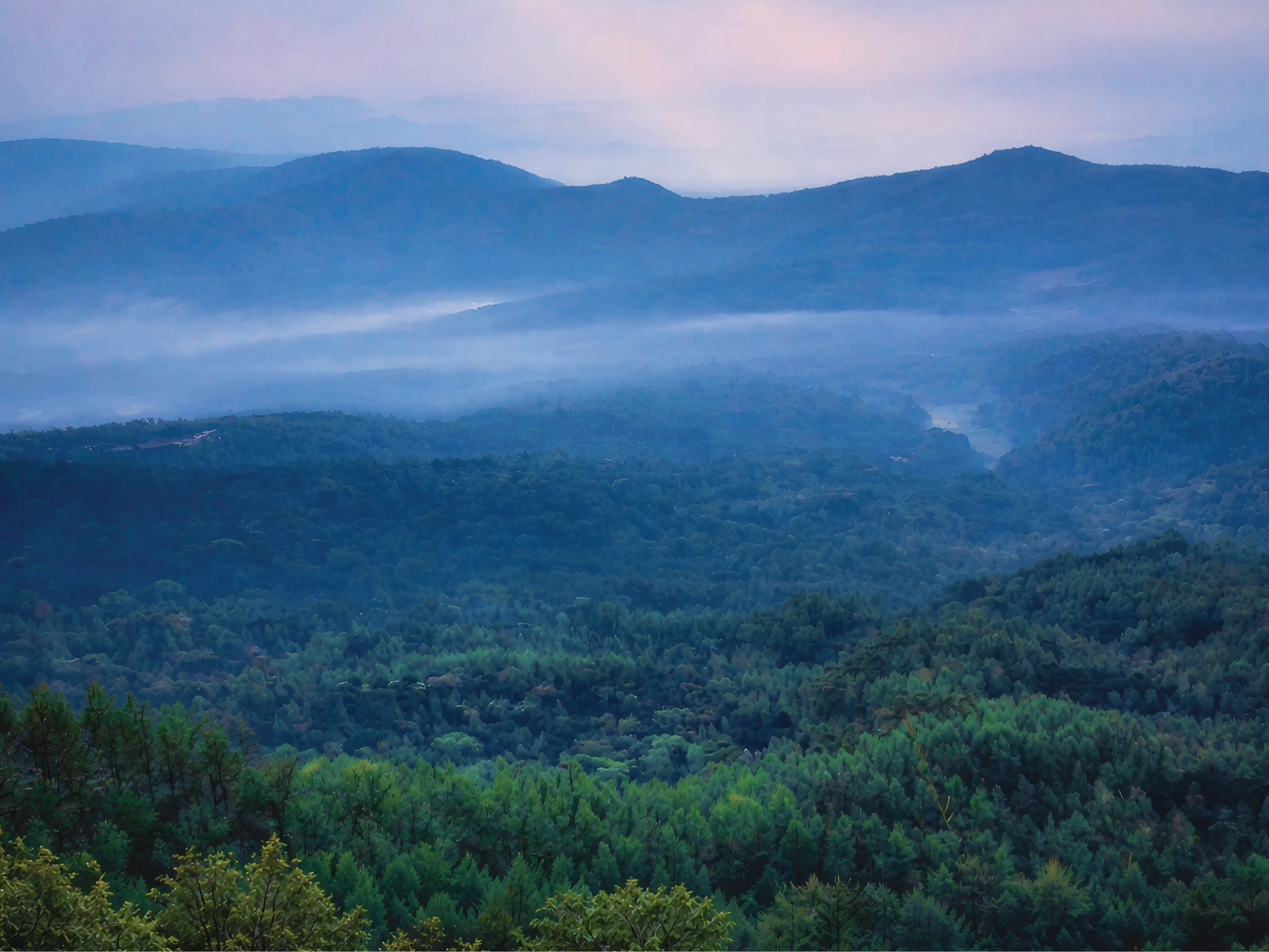
It is possible to experience the Western Ghats without having to wander deep inside the forests, but this does not mean birdwatching here is effortless. Chikmagalur’s landscape, made up of riverine stretches, evergreen forests, and coffee plantations, creates a setting where many bird species move through overlapping habitats. This allows birders to observe a variety of birds within short travel distances, provided there is patience, timing, and an understanding of habitat use.
Chikmagalur is considered one of the more productive regions for birding in Western Ghats range, not because sightings are guaranteed, but because multiple habitats occur close together, increasing the chances of encountering different bird groups over time. The presence of all varieties of birds, including residents, bird-endemics, and migratory birds, makes it sure that with each visit, different birds are viewed. An early morning walk along rivers, plantations, or forest boundaries may provide good spotting opportunities, especially for common and habitat-tolerant species such as kingfishers, barbets, drongos, and flycatchers, which may often be more visible and vocal during these hours.
Due to this, lodging areas and resorts came up near river corridors and forest habitats, and such areas are the best for birdwatching in Chikmagalur. Visitors may encounter a wide range of birds of Chikmagalur without having to trek deep into forest interiors, particularly species that use river edges, plantations, and forest fringes. However, more secretive or forest-interior birds still require time, quiet observation, and favourable conditions to spot.
With the increased possibility of various habitats, endemic, and migratory bird species sightings, and its incredible vantage points, Chikmagalur is a must-visit destination.
Best Time for Birdwatching in Chikmagalur
Best Season for Birdwatching in Chikmagalur
The best time for birdwatching in Chikmagalur also determines our tour direction, which in turn depends on species number and breeding patterns.
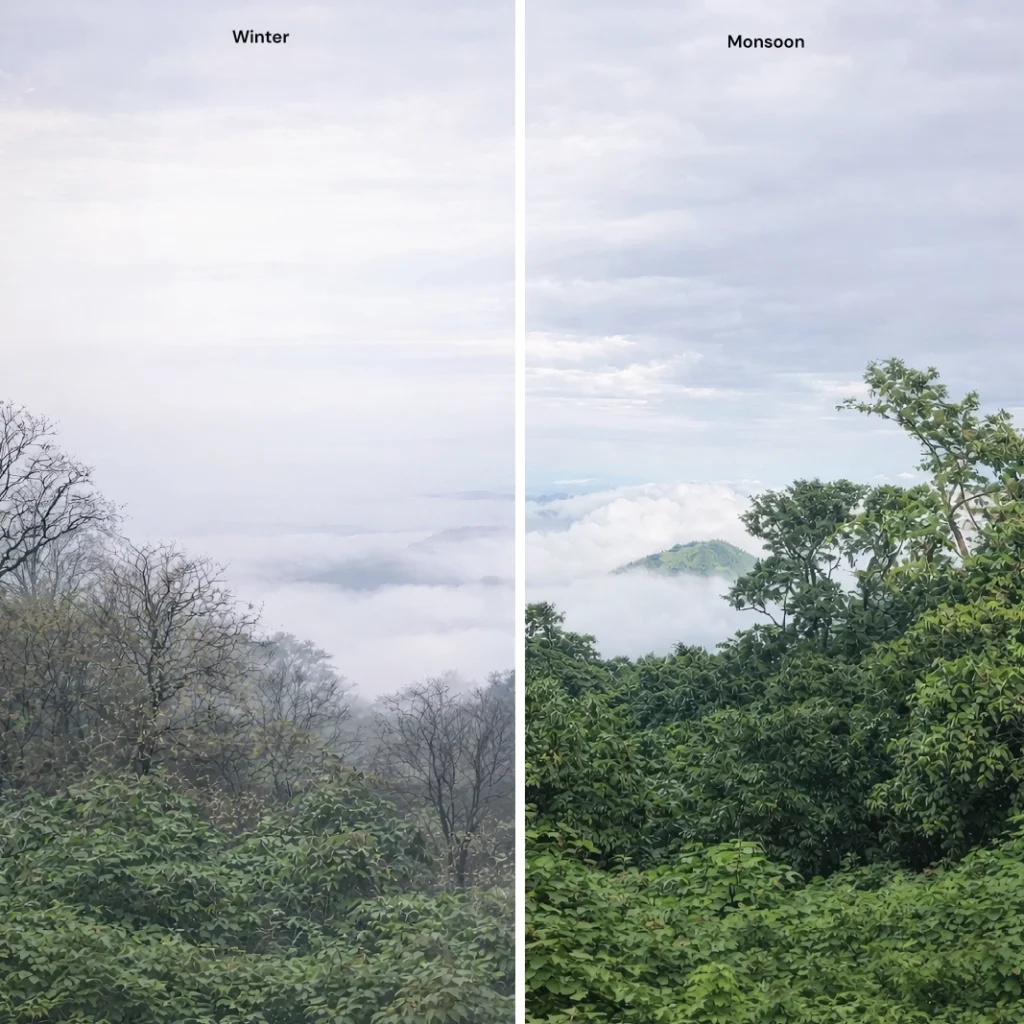
- October To March: Peak diversity time ⭐️Rivermist’s pick
Migrant species like Indian Blue Robin, Verditer Flycatcher, Brown Shrike, and Forest Wagtail may be found. Higher activity of raptors and passerines can be observed because of reduced temperatures and consistent food availability. - June to September (Rainy/Monsoon): Critical for endemic and breeding birds like frogmouths, pittas, trogons, and barbets are active during this period. The abundance of amphibians also attracts insect-eating birds. Perfect for experienced birders and scientists.
- April – May: High temperatures decrease midday activity
Not the best season for birdwatching in Chikmagalur, but early morning waterside walks are rewarding for kingfisher, bee-eater, eagles, and bulbul sightings.
Early Morning Birdwatching Tips for Better Sightings
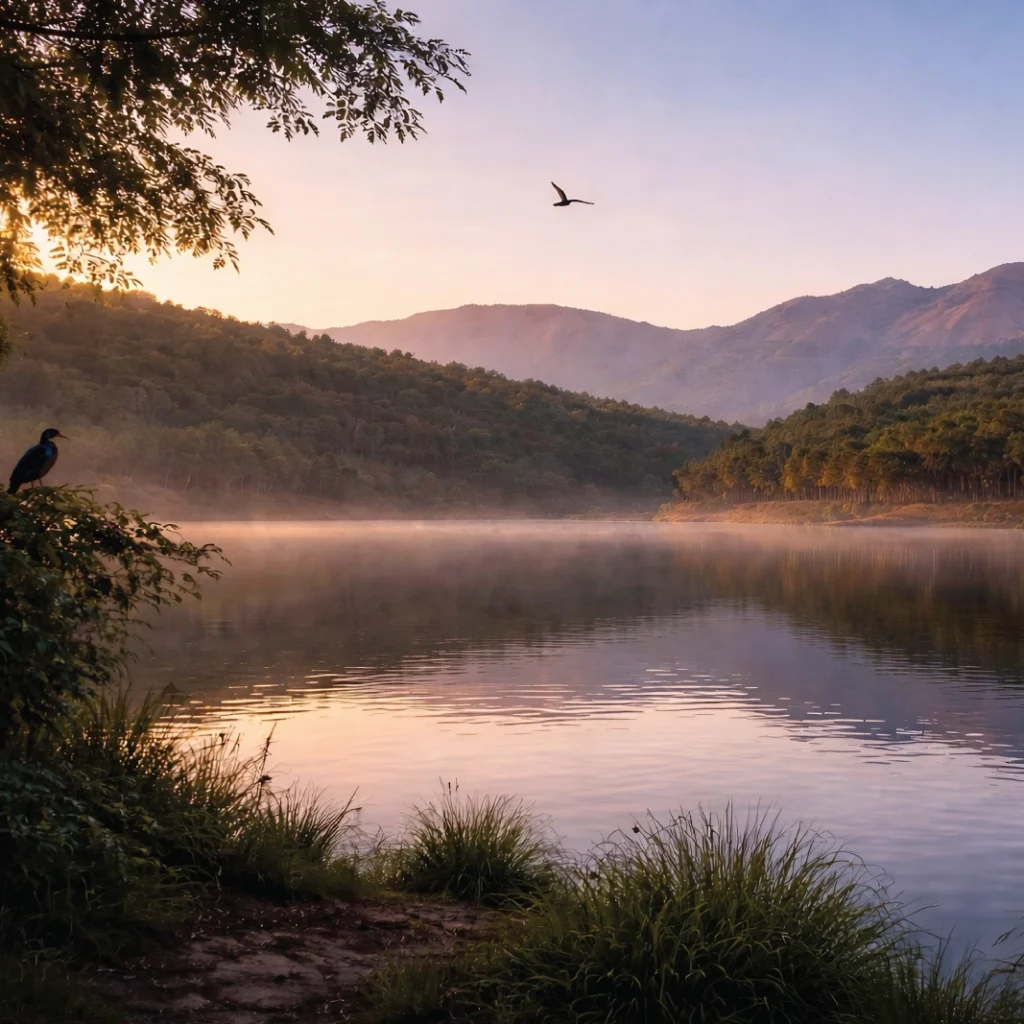
Effective early morning birdwatching tips in Chikmagalur are very habitat-specific:
- From 6:00 to 9:00 AM are ideal, along the banks of rivers.
- Familiarise with sound detection (flycatchers, babblers and shamas).
- Observations from a standing POV is preferable than taking long walks.
- Avoid artificial feeding areas – nature’s corridors perform better.
- Cloudy skies allow usually better visibility for raptors and flycatch.
Best Birdwatching Spots in Chikmagalur
Birdwatching Near Bhadra Wildlife Sanctuary
Birdwatching near Bhadra Wildlife Sanctuary is famous for raptors, hornbills, woodpeckers, and riverine birds. But in core areas, permission and limited entry times are necessary.
Buffer zones, river systems which flow into the Bhadra basin, or forest-associated private land may offer a similar range with lesser restrictions on access.
Nature Walks for Bird Watching in Chikmagalur
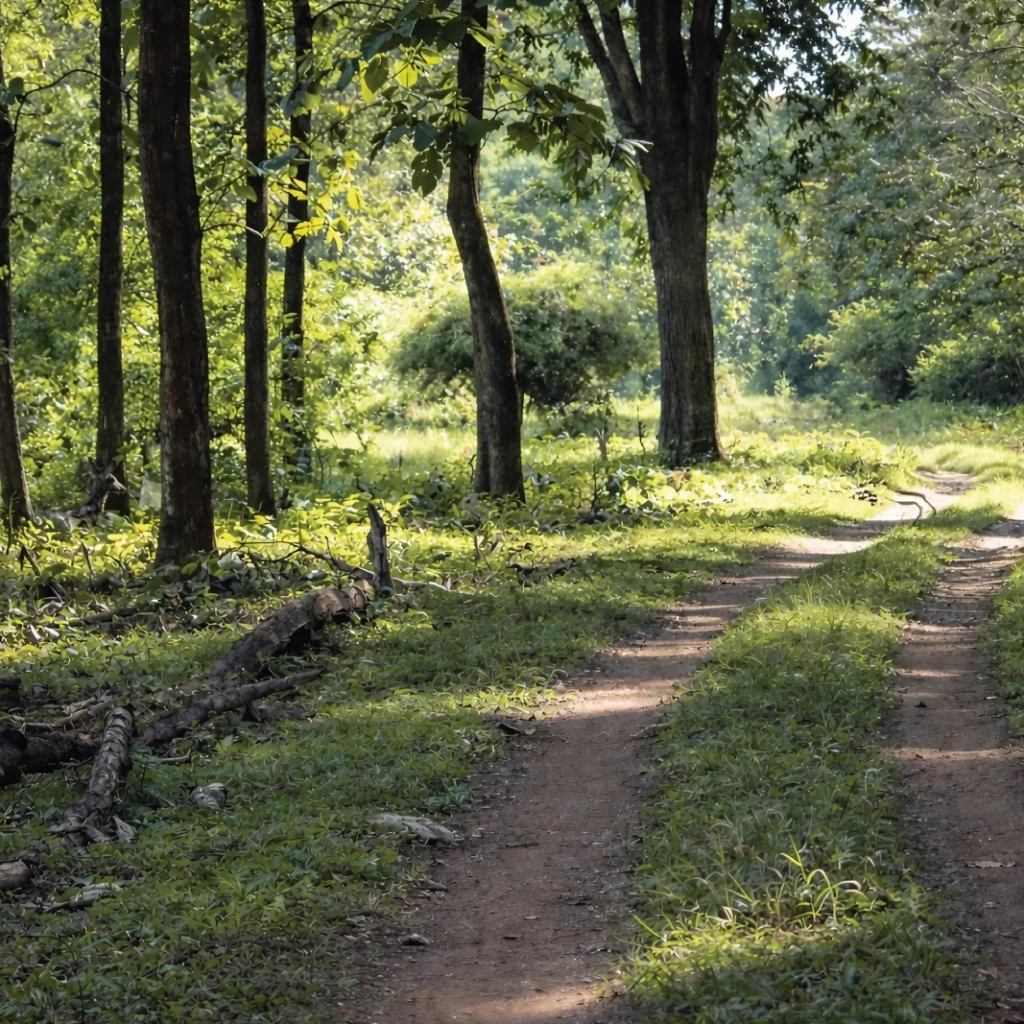
Well-planned nature walks for birdwatching in Chikmagalur, are more-successful than jeep safaris owing to:
- Riverine vegetation
- Canopy trees
- Open clearings
- Non-disturbing understory
- Provides constant passage to birds.
Resorts located in consideration to these aspects excel compared to forest lodges, where birdwatching is location-independent.
Birds You Can Spot in Chikmagalur
Endemic Birds of the Western Ghats
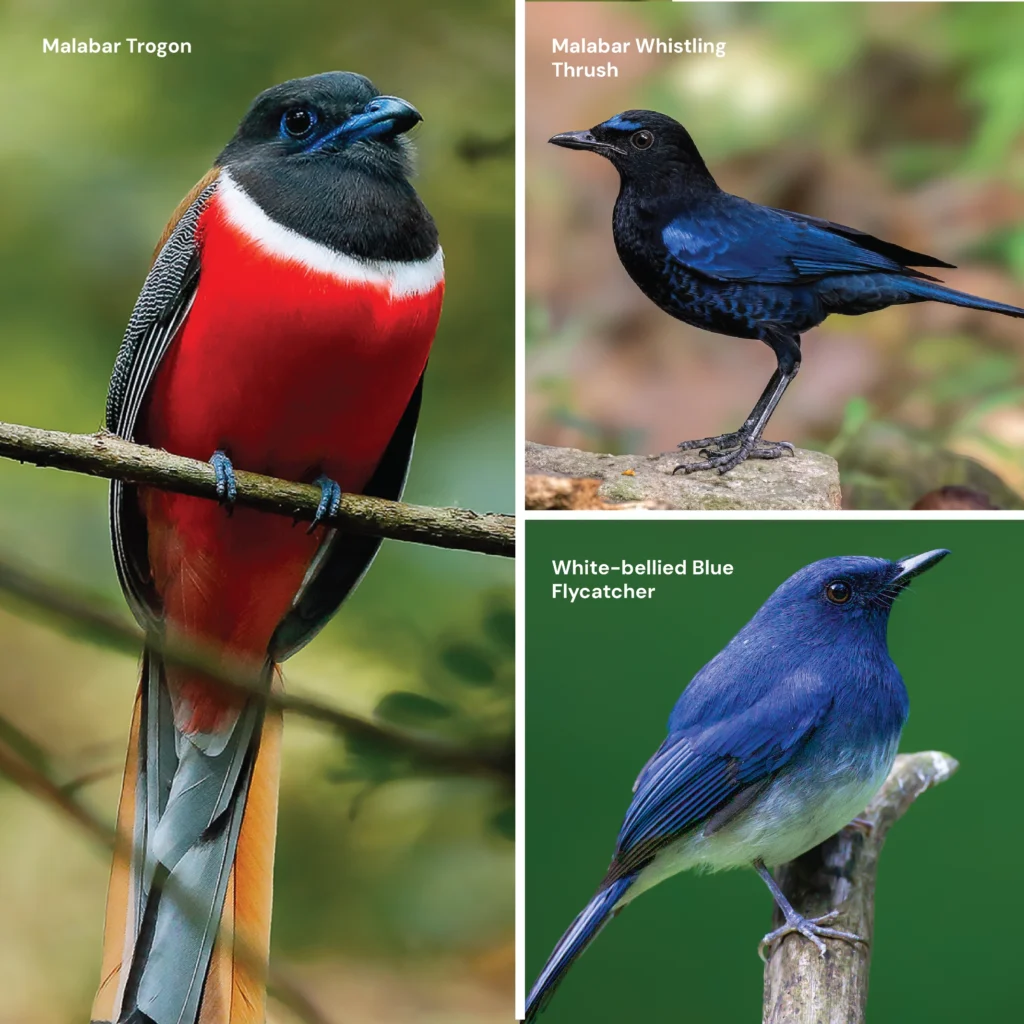
Chikmagalur houses a wide variety of endemic birds of the Western Ghats. Some globally range-restricted species recorded around the region include::
- Malabar Trogon
- White-bellied Blue Flycatcher
- Sri Lankan Frogmouth
- Nilgiri Wood Pigeon
- Malabar Whistling Thrush
- Malabar Barbet
- Malabar Parakeet
- Puff-throated Babbler
- Grey-headed Bulbul
While these species are recorded in Chikmagalur, they are not always easy to spot. Birds such as the Malabar Trogon, Malabar Whistling Thrush, and Sri Lankan Frogmouth are habitat-specific and behaviourally elusive, often requiring quiet conditions, familiarity with calls, and repeated attempts for successful sightings.
Migratory birds of Chikmagalur
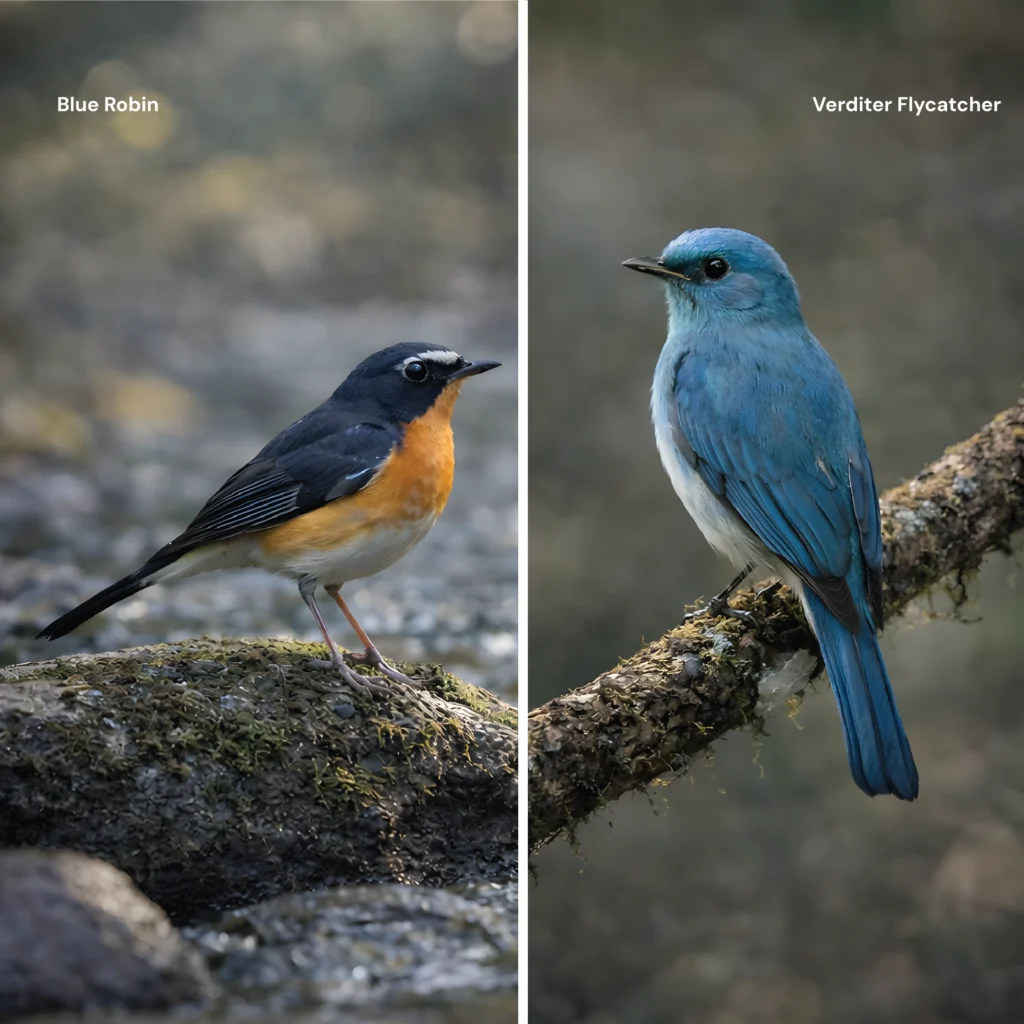
Seasonal visitors of migratory birds in Chikmagalur that are recorded consistently, include:
- Indian Blue Robin
- Verditer Flycatcher
- Brown Shrike
- Forest Wagtail
- Grey Wagtail
- Tickell’s Blue Flycatcher
It peaks from November to February over river systems and shaded plantations.
Beginner Guide to Birdwatching in Chikmagalur
It works well for beginners because the landscape works with high bird density, mixed habitats, and vocal species, meaning that beginners can start noticing bird activity relatively quickly, especially common and vocal species, even without expert skills or expensive gear
Unlike deep-forest destinations requiring long treks and prior knowledge, Chikmagalur allows a complete novice to start learning pattern recognition-calls, movement, perching behaviour-out in comfortable, easily accessible settings such as riverbanks, forest edges, and plantation trails that are tree-shaded.
More elusive forest species, however, may take longer to appear and should be treated as a bonus rather than an expectation.
This region however makes an ideal place for:
- First-time bird watchers
- Families and older travelers
- Casual photographers
Beginner Birdwatching Checklist
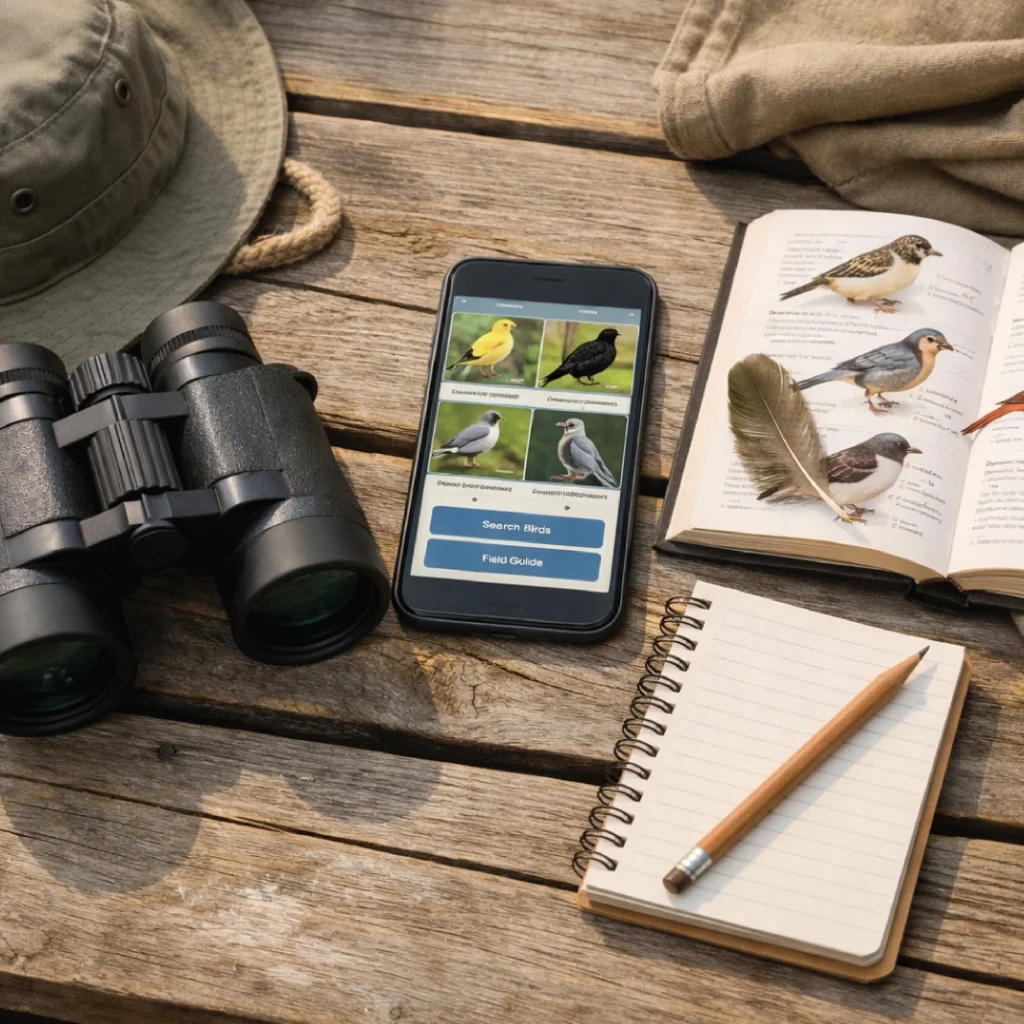
A beginner birdwatching checklist of basic items include:
- A field guide or guidebooks
- Binocular (Power: 8× or 10× and lightweight, avoiding higher magnification)
- Field guide or bird ID app for South India / Western Ghats region
- Neutral-coloured clothing, avoiding white, red, or neon colors
- Comfortable walking shoes with good grip
- A small notebook/note app on time, location and behavior
Optionally:
- Camera with zoom lens (a lens with a zoom of up to 300mm will do)
- Cap or wide-brim hat
- Reusable water bottle
- Lightweight rain layers (particularly June to September)
What Beginners Should Avoid:
- Loud clothes or perfumes
- Playing back bird songs to lure birds into the area of interest
- Moving continuously between locations
- Expecting to “spot everything” on day one

Bird Photography in Chikmagalur: Tips for Beginners
Bird photography in Chikmagalur can be rewarding, particularly for common and semi-habituated species that perch openly and return to the same trees, especially near water bodies and low-disturbance areas.
Practical Tips That Actually Work:
- Shoot between 6:30 and 9:00 a.m. when there is soft lighting
- More common varieties of birds should be dealt with
- Use the ‘Shutter’ mode: freeze action – 1/1000 sec
- And, more importantly: Let the birds come to you, don’t chase them
- Photograph the behavior rather than the pose: feeding, calling, preening, etc
Why Birding in Chikmagalur (Western Ghats) Is So Rewarding
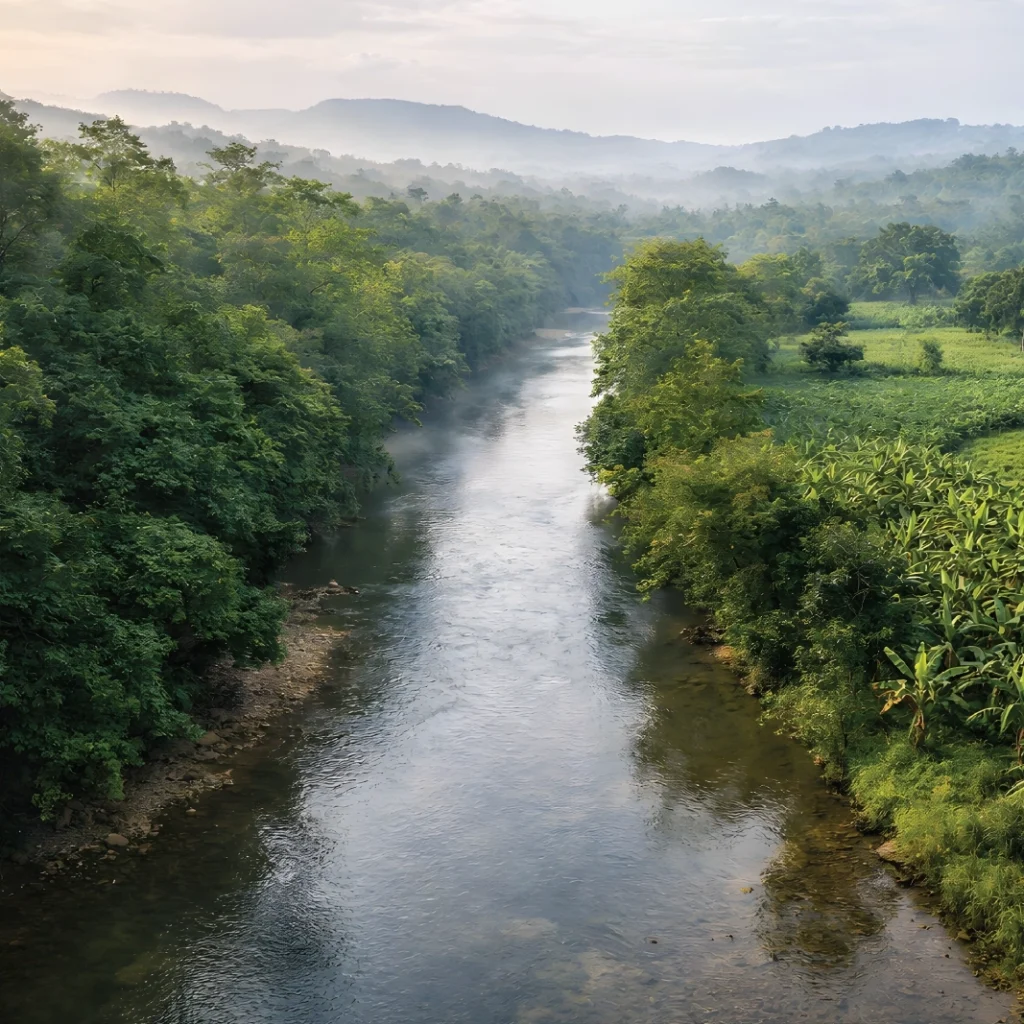
One of the major aspects which define birding in Western Ghats is that it is habitat-based and not location based. Chikmagalur is one of those places where one gets a good mix of evergreen forests, riverine areas, plantations, and grasslands close to each other, ensuring a constant turnover of bird species.
The reason why birdwatching in Chikmagalur is so exciting is the factor of predictability. Certain birds in the region exhibit fairly consistent behavioural patterns, such as using the same perches or calling from familiar locations, though this predictability improves with repeated observation rather than single visits.
A conveniently spot here, usually has:
- Endemic birds of the Western Ghats and common birds found across India
- Migratory overlap during the seasonal periods without major climate fluctuations
- Presence of raptors due to open valleys and thermal currents
- River-dependent bird species that are active during warm periods
Serving as a high reward–low effort equation in birding landscapes.

Why RiverMist Resorts Works Well as a Birdwatching Base in Chikmagalur
While birdwatching in Chikmagalur, where you’re staying is almost as important as where you’re going. RiverMist Resorts is not just located amidst a hotspot, it is a launching site in a birding environment. With fewer transfers, less disturbance, and more uninterrupted observation time.
Easy Access to Quiet Nature Walks & Short Birding Trails
The most attractive thing about this location is the direct access it gives residents to nature walks for bird watching. This is because the birds are passing through the land due to the location, which is along a river-lined green corridor, as opposed to being attracted to the land.
Short, flat trails enable slow, repeated walks as an alternative to one-off treks, observations from stations close to water and at canopy edges and accommodating sessions according to weather and energy levels
One of the early morning birdwatching tips to help you get started, would be to go just outside your room and start observing between 6:30 and 8:30 in the morning.
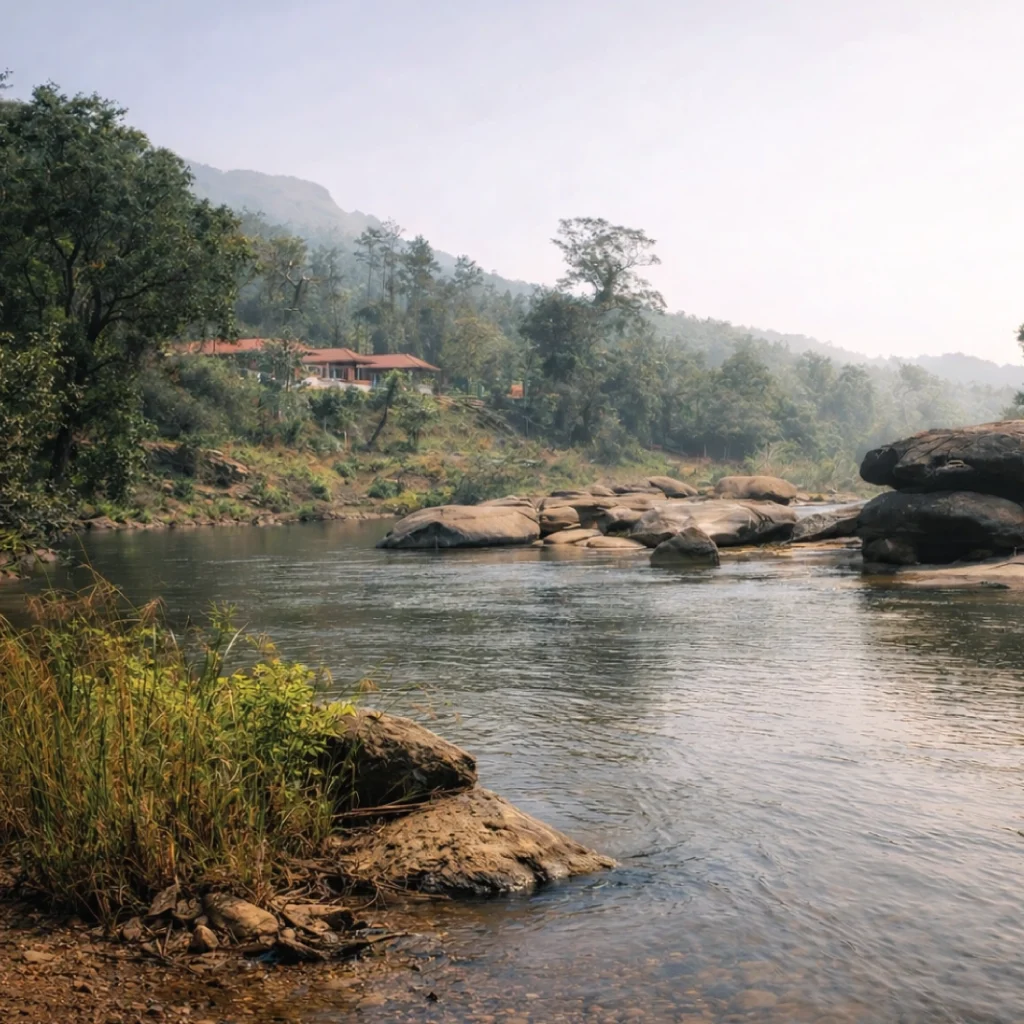
A Calm Setting That Supports Better Bird Sightings and Bird Photography
Noise, crowding, and constant motion decrease bird activity. A low-disturbance environment supports:
- Birds perching longer and returning to the same spots.
- Visible sightlines to view behaviour
- Predictable light in conditions along riverbanks and clearings
This matters in the case of bird photography in Chikmagalur. Photographers have:
- Sturdy perches for flycatchers, bee-eaters, and kingfishers
- Soft morning light filtered through forest canopy
- Time to wait rather than chase subjects
The diversity of birds of Chikmagalur recorded here, from endemic forest species to wetland birds, increases probability for good photo sets without covering large distances.
Comfortable for Beginners and Families Planning Short Birding Sessions
Not all guests carry a beginner birdwatching checklist. So, RiverMist personally tailors itinerary to:
- Beginners testing their limits
- Families with children of different levels of physical activity
- Elderly travelers who like shorter walks
All it takes in the way of a carry checklist for birdwatching in Chikmagalur is binoculars and a field guide and/or the water they drink (which takes only roughly 30 to 60 minutes).
This flexibility ensures a top-notch local experience to first-time visitors and loyal customers alike.
FAQs
1. What is the best time for birdwatching in Chikmagalur?
The best time is ideally early in the mornings, that is between 6:00 AM & 9:00 AM. It is an excellent time all through the year. Periods between October and March are likely to provide a higher variety of species due to migratory ones, while the monsoon season may provide sights of endemic and breeding species.
2. Which are the best birdwatching spots in Chikmagalur?
Some of the most ideal locations for birding in Chikmagalur include: The Bhadra Wildlife Sanctuary and surroundings, river corridors, coffee estates bordering the forests, and nature trails along river areas.
3. What birds can beginners spot in Chikmagalur?
Beginners may most easily catch sight of kingfishers, bulbuls, drongos, bee-eaters, flycatchers, mynas, barbets, and parakeets.
4. Is Chikmagalur good for bird photography?
Yes, Chikmagalur is a better location to take pictures of birds, as it has good concentrations of bird life, predictable perch behavior, favorable forest light, and consequently easy access to water bodies.
5. Can migratory birds be seen in Chikmagalur year-round?
The migratory birds migrate seasonally and most of them can be observed from October to March. The residents and endemics are usually observable throughout the year.